Sony Reaffirms 2028 Physical Disc Phase-Out with Japan PS5 Digital Announcement
Sony Interactive Entertainment reiterates its unyielding January 2028 deadline for physical disc phase-out, anchoring the policy in the Japan-exclusive PS5 Midnight Black Digital announcement and 82 percent digital software sales.
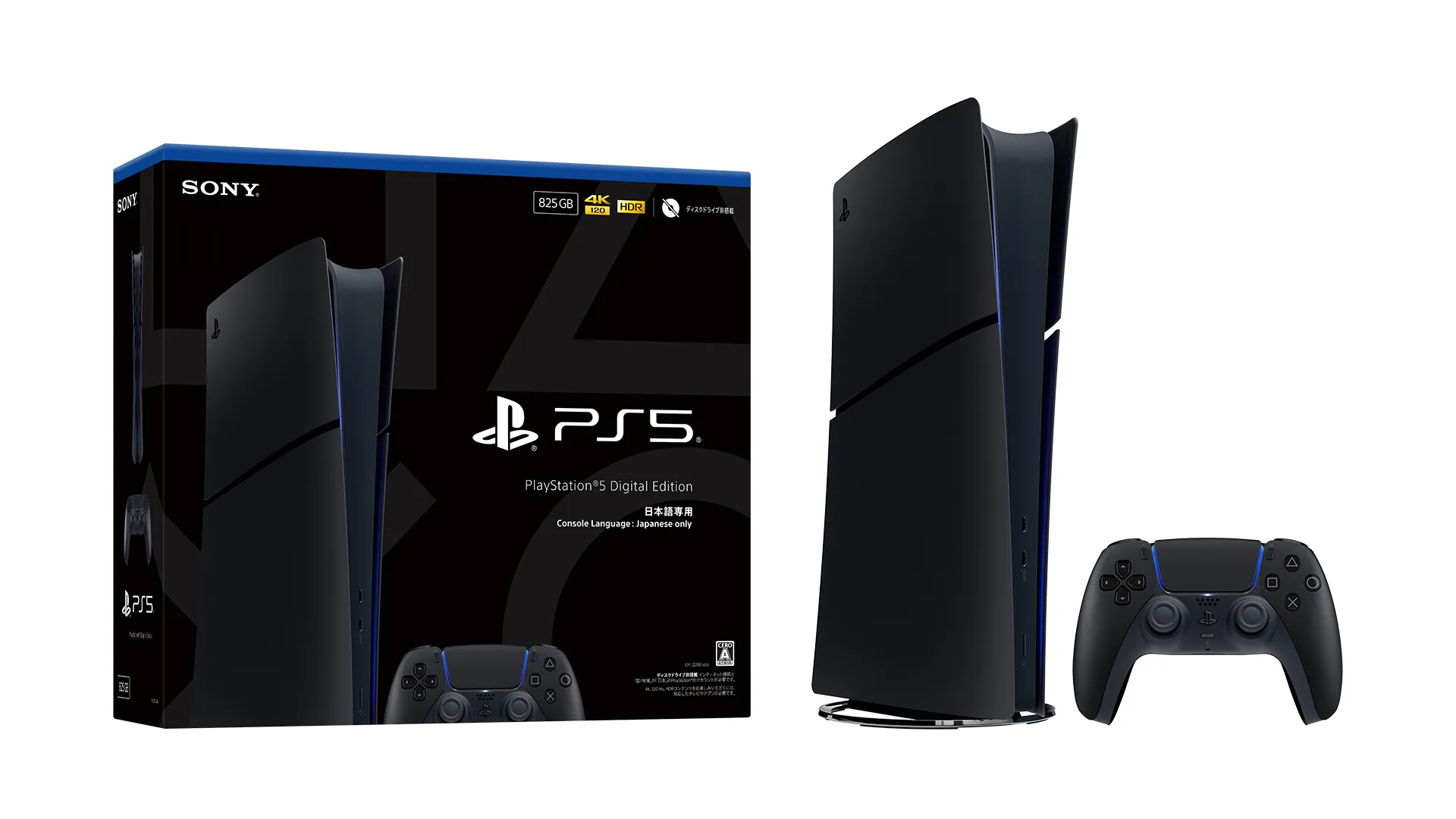
Sony Interactive Entertainment has officially reiterated that new PlayStation software releases will transition entirely to digital formats starting in January 2028, using the product announcement of a Japan-exclusive console to reaffirm its timetable. Published on the Japanese PlayStation Blog alongside the reveal of the PlayStation 5 Digital Edition Midnight Black, the notice confirms that physical optical discs will no longer be manufactured for new titles once the cutoff arrives. The corporate reaffirmation demonstrates that months of intense community backlash and collector petitions have failed to alter the platform holder's long-term hardware and software roadmap.
The decision to pair the policy reminder with a domestic hardware launch underscores how Sony intends to manage the final stages of the transition. While the company originally disclosed the January 2028 sunset date in July 2026, subsequent industry speculation suggested the manufacturer might reconsider under public pressure. Instead, the domestic blog post confirms that newly published software will be sold exclusively as digital downloads on the PlayStation Store and through authorized digital retail codes, closing the door on conventional disc production.
Hardware Repackaging and the Standalone Disc Drive Strategy
The physical vehicle for Sony's policy reinforcement is the PlayStation 5 Digital Edition Midnight Black, scheduled to launch across Japanese retailers on November 19, 2026, with formal pre-orders opening on October 20. Priced at 55,000 yen (tax included), the package features an internal 825 GB solid-state drive encased in the matte dark finish previously reserved for standalone DualSense controllers and custom console covers. Rather than introducing architectural revisions, the unit packages standard Slim-era processing components into an all-black form factor engineered specifically for the holiday shopping season.
To serve users who still hold existing physical libraries, Sony will simultaneously offer a standalone Midnight Black disc drive accessory on November 19 for 11,980 yen. Combining the standalone console and the modular drive brings the complete hardware package to 66,980 yen, illustrating how the optical reader has migrated from a baseline system component to an auxiliary purchase. By uncoupling the physical drive from the core machine, the platform holder shifts the financial burden of optical hardware directly onto consumers who demand legacy compatibility.
The domestic release carries strict geographical safeguards designed to prevent foreign buyers from exploiting currency fluctuations and domestic retail discounts. The Midnight Black console functions exclusively with PlayStation Network accounts registered in Japan, and the system operating interface is permanently locked to the Japanese language. The technical restrictions ensure that this lower-priced digital hardware remains insulated within its target market, eliminating grey-market exportation to Western territories where standard hardware continues to command higher retail prices.
Corporate Balance Sheets and the Irreversible 82 Percent Digital Reality
Behind the unyielding 2028 deadline lies an economic calculation that platform executives consider practically irreversible. During a corporate earnings briefing in August 2026, Sony Chief Financial Officer Lin Tao addressed consumer hostility directly, noting that "82% of full-game software unit sales were digital" across the active PlayStation ecosystem. From a financial perspective, physical game discs have shrunk from a foundational revenue engine into a minor fraction of overall software transactions, making the maintenance of physical supply chains increasingly difficult to justify.
The transition reflects an uninterrupted ten-year shift in player purchasing habits. In fiscal year 2018, digital downloads accounted for approximately 43% of full-game sales on PlayStation Network, climbing to 70% by the close of fiscal 2023 before reaching the 82% threshold documented by Tao. For Sony, delivering games through digital storefronts eliminates disc pressing expenses, plastic packaging procurement, warehouse logistics, and retailer margin sharing, while eliminating the commercial threat posed by physical retail disc distribution.
While physical discs continue to command sentimental and cultural significance among dedicated enthusiasts, their commercial weight within Sony’s corporate balance sheet has diminished to the point where consumer discontent is outweighed by distribution margins. The platform holder is systematically preparing its audience for a landscape where optical media is no longer an expected standard. Reaffirming the policy well ahead of the deadline allows the publisher to establish digital procurement as an accepted reality before the industry enters its next console generation.
Ken Kutaragi’s Economic Verdict: From Optical Pioneer to Digital Inevitability
The economic argument against physical discs received unexpected validation from Ken Kutaragi, the former chief executive of Sony Computer Entertainment and lead architect of the first three PlayStation consoles. Speaking at the Game Republic New Horizons conference in Middlesbrough, UK, the veteran engineer who established CD-ROM, DVD, and Blu-ray formats as the backbone of console gaming over three decades addressed Sony’s 2028 sunset policy, describing physical discs as an outdated psychological metaphor for ownership rather than a technological necessity.
Kutaragi explained that physical discs have transformed into a psychological placeholder for property rights, noting that maintaining boxed media is no longer economically reasonable when network terminals deliver instantaneous digital access. “Physical discs have become a metaphor for ‘owning’ games,” Kutaragi remarked, underscoring how ballooning semiconductor fabrication expenses and the breakdown of traditional silicon scaling have made console manufacturing increasingly difficult to sustain without optimizing software distribution margins.
The remarks mark a decisive philosophical shift: even the creator of the optical PlayStation acknowledges that modern gaming consoles must operate as connected network devices rather than isolated optical appliances, reinforcing Sony’s unwavering commitment to the 2028 digital horizon.
Preservation Friction, Niche Publishers, and the Secondary Market
The platform's transition toward an exclusively digital storefront has provoked persistent pushback from game preservation advocates and consumer rights groups. Initiatives such as the "Stop Killing Games" movement have highlighted how server-dependent software architectures effectively extinguish the First Sale Doctrine, denying players the ability to resell, trade, or lend their purchases. Unlike physical discs, which can be shared freely and run independently of network servers, digital licenses remain revocable agreements tied to individual account credentials, leaving entire libraries vulnerable to future storefront closures.
Mid-tier publishers and regional developers face distinct commercial challenges under a mandatory digital mandate. Speaking with Kotaku at PAX West, Kenzo Saruhashi, chief executive officer of Nippon Ichi Software and president of NIS America, acknowledged the ongoing friction while maintaining that his company remains in active dialogue with Sony. Saruhashi noted that "I think they are listening to consumer feedback a lot," explaining that smaller Japanese studios heavily rely on high-margin physical collector’s editions and specialized retail packaging to connect with devoted fanbases.
To bridge the gap between commercial margins and collector demand, independent studios are evaluating alternative distribution models, including physical display boxes containing redemption codes and bespoke merchandise bundles. However, code-in-box alternatives offer none of the long-term software preservation benefits of an actual optical disc containing executable code. For independent video game stores and specialty retailers that survive primarily on used disc transactions, the elimination of physical software for major consoles threatens the viability of their business model.
Platform Governance and the Operational Unknowns of 2028
Sony Interactive Entertainment has sought to calm existing owners by guaranteeing that physical discs manufactured and released prior to January 2028 will continue to function on disc-enabled PS5 hardware indefinitely. Backward compatibility for legacy discs from the PS4 and PS5 libraries remains fully supported, protecting older collections from immediate hardware obsolescence. The company has clarified that the restriction applies specifically to new game production rather than retroactive playback bans.
Nevertheless, key operational questions remain unaddressed in the corporate documentation. The Japanese announcement does not clarify whether international third-party publishers will face contractual prohibitions against producing independent physical disc runs at their own expense after the 2028 deadline. Furthermore, Sony has not indicated whether hardware revisions or subsequent console generations will retain compatibility with external disc drives. For now, the fourteen months between the Midnight Black debut and January 2028 represent the final transitional window for physical media in the mainstream console market.
Was this article helpful?
Your feedback helps our editorial team refine reporting depth and accuracy.
Related Articles
Aug 30, 2026
SEGA Unveils Rio de Janeiro Setting for Crazy Taxi: World Tour at BGS 2026
SEGA and series creator Kenji Kanno presented a 30-minute playable demo of Crazy Taxi: World Tour at Brasil Game Show 2026, revealing a Rio de Janeiro open-world map with authentic licensed storefronts ahead of its 2027 multiplatform launch.

Aug 24, 2026
Crimson Desert’s 77 Metascore Sparks Industry Reckoning Over Review Embargos and Day-One Patches
Pearl Abyss executive Lybee Park acknowledges pre-launch review conditions and missing day-one patches impacted Crimson Desert's 77 Metascore as sales pass 5 million.

Aug 22, 2026
Gears of War: E-Day Sells 230,000 Copies as Game Pass Cannibalization Debate Reignites
Alinea Analytics reports Gears of War: E-Day sold 230,000 copies as 1.7M played via Game Pass, with $30 early access upgrades driving $37M launch revenue.