Gears of War: E-Day Sells 230,000 Copies as Game Pass Cannibalization Debate Reignites
Alinea Analytics reports Gears of War: E-Day sold 230,000 copies as 1.7M played via Game Pass, with $30 early access upgrades driving $37M launch revenue.
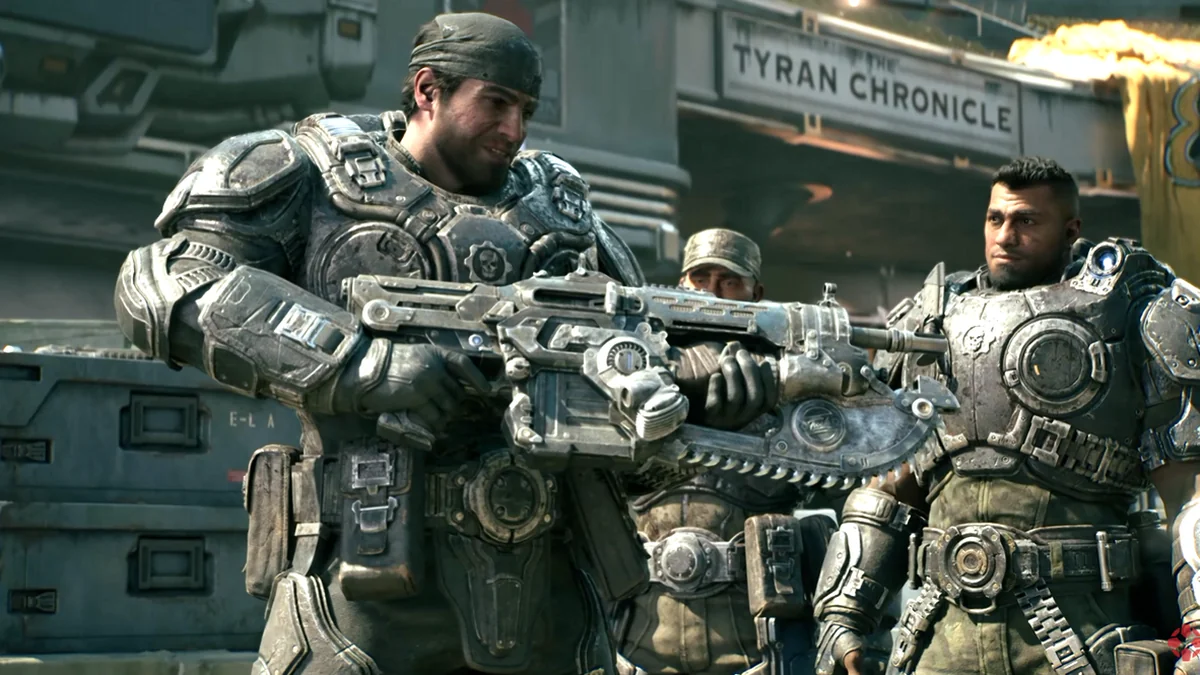
The commercial debut of Gears of War: E-Day has reignited fierce scrutiny over Microsoft's subscription economics. According to tracking estimates published by market research firm Alinea Analytics, the flagship shooter generated approximately 230,000 full-copy unit sales following its October 1 early access arrival and October 6 global launch. At the same time, an estimated 1.7 million players accessed the title directly through Xbox Game Pass.
The disparity illustrates a structural reality that gaming industry analysts have warned about for years. In an analytical update published in The Alinea Insight, market analyst Rhys Elliott observed that "Game Pass is cannibalizing much of the premium revenue," noting that the traditional $70 retail model has become "in practice, dead on Xbox." While player engagement across Microsoft's subscription ecosystem remains substantial, standalone consumer purchases on the home console have plummeted to historically thin margins.
The Steam Lifeline and the Collapse of Full-Priced Console Sales
The breakdown of standalone unit sales reveals that personal computer storefronts, rather than Microsoft's proprietary hardware, provided the vast majority of direct retail purchases. Of the 230,000 estimated units sold, Valve's Steam platform accounted for roughly 168,000 copies, representing 73.04% of all traditional transactions. Conversely, the entire Xbox ecosystem—encompassing Xbox Series X/S consoles and the native Windows Xbox app—captured just 62,000 copies, or 26.96% of the sales volume.
This dramatic divergence aligns squarely with historical warnings from senior industry observers. In 2025, Christopher Dring, head of GamesIndustry.biz, cautioned that publishers placing premier releases day-and-date into subscription catalogues could anticipate severe collateral impact on traditional store shelves. "Games that go into Game Pass can expect to lose about 80% of their premium sales on Xbox," Dring highlighted during industry market reviews.
For console owners who already pay a recurring monthly fee for catalog access, committing an additional $70 to purchase an outright licence offers negligible consumer incentive. The console audience has effectively adapted its purchasing behaviour to treat first-party blockbusters as service benefits rather than capital acquisitions, leaving platform storefronts reliant on third-party PC storefronts to collect standard box revenue.
Monetizing Impatience: How the $30 Early Access Upgrade Carried Launch Revenue
While traditional game sales on Xbox consoles stalled, Microsoft unlocked an alternative monetization valve: selling early entry to players who were unwilling to wait for the standard subscription rollout. Alinea Analytics reports that roughly 722,000 Game Pass subscribers paid an additional $30 for the "Premium Edition Upgrade" to secure five days of advance gameplay starting October 1.
That mechanical tier shift transformed the financial complexion of the release window. The 722,000 upgrade passes generated approximately $21.66 million in immediate gross turnover, comfortably outstripping the $16.10 million produced by full-priced $70 game sales across all platforms combined. In total, the game accumulated roughly $37 million in gross launch receipts across full software units and premium add-ons.
On Microsoft's own hardware, the conversion dynamic was even starker. Within the Xbox ecosystem, consumers purchased nearly 12 early access upgrades for every single standalone copy sold at retail. In practice, approximately 952,000 total players committed discretionary spending toward Gears of War: E-Day during its opening week, but more than three-quarters of that paying cohort opted to bypass the standard $70 price tag entirely.
Historical Benchmarks and the High Cost of Subscriber Acquisition
Despite securing $37 million in immediate gross receipts and assembling an estimated active audience of 1.93 million players in its opening week, the debut of Gears of War: E-Day reflects measurable contraction when measured against prior franchise milestones. When developer The Coalition delivered Gears 5 in September 2019, Microsoft officially confirmed that the release gathered more than 3 million active players over its premiere weekend alone, establishing what was then the company's biggest first-party launch of the Xbox One era.
The decision to rely heavily on $30 premium upgrades follows a distribution playbook Microsoft previously executed during the September 2023 rollout of Bethesda's Starfield. In that instance, hundreds of thousands of Game Pass subscribers purchased the digital upgrade to access the space role-playing game prior to its general catalog debut. However, while premium upgrades supply valuable upfront liquidity, they generate less than half the revenue of a conventional $70 retail purchase, placing immense mathematical pressure on high-budget AAA productions whose development cycles routinely exceed several hundred million dollars.
Unaudited Ledgers and the Strategic Crossroads of Day-One Releases
The ongoing industry debate surrounding Gears of War: E-Day remains shaped by third-party tracking models rather than audited corporate filings. As pop culture portal Ei Nerd pointed out in its coverage of the estimates, Microsoft has not published official commercial figures, verified revenue returns, or disclosed the net change in active Game Pass subscribers attributed to the shooter's debut. The developer The Coalition has similarly maintained confidentiality regarding its final development expenditures and post-launch milestones.
What the available tracking data demonstrates is that day-and-date subscription releases have fundamentally dismantled the traditional $70 sales curve on Xbox hardware. What remains unresolved is whether recurring subscription fees and $30 early access upgrades can reliably replenish the balance sheets of massive premier franchises without requiring Microsoft to reconsider its commitment to unrestricted day-one catalog launches.
Was this article helpful?
Your feedback helps our editorial team refine reporting depth and accuracy.
Related Articles
Aug 21, 2026
Konami Confirms Second and Third Waves of Silent Hill Projects Following Townfall Release
Series producer Motoi Okamoto confirms in Famitsu that Konami is evaluating pitches for second and third waves of Silent Hill after wrapping Townfall.
Aug 19, 2026
PS5SX2 Enables Physical PS2 Disc Playback on Jailbroken PlayStation 5 Hardware
Homebrew emulator PS5SX2 v2.02 introduces physical PS2 DVD playback directly through the PlayStation 5 optical drive, exposing hardware constraints and Sony's retro ecosystem policies.
Aug 18, 2026
Project Rasengan: Masashi Kishimoto Returns With New Manga 'Shadow Rising' and 3-Year Naruto Roadmap at NYCC
Masashi Kishimoto officially returns to write and illustrate the new manga Naruto: Shadow Rising, headlining the 3-year Project Rasengan announced at NYCC 2026 alongside an anime crossover and new games.