PS5SX2 Enables Physical PS2 Disc Playback on Jailbroken PlayStation 5 Hardware
Homebrew emulator PS5SX2 v2.02 introduces physical PS2 DVD playback directly through the PlayStation 5 optical drive, exposing hardware constraints and Sony's retro ecosystem policies.
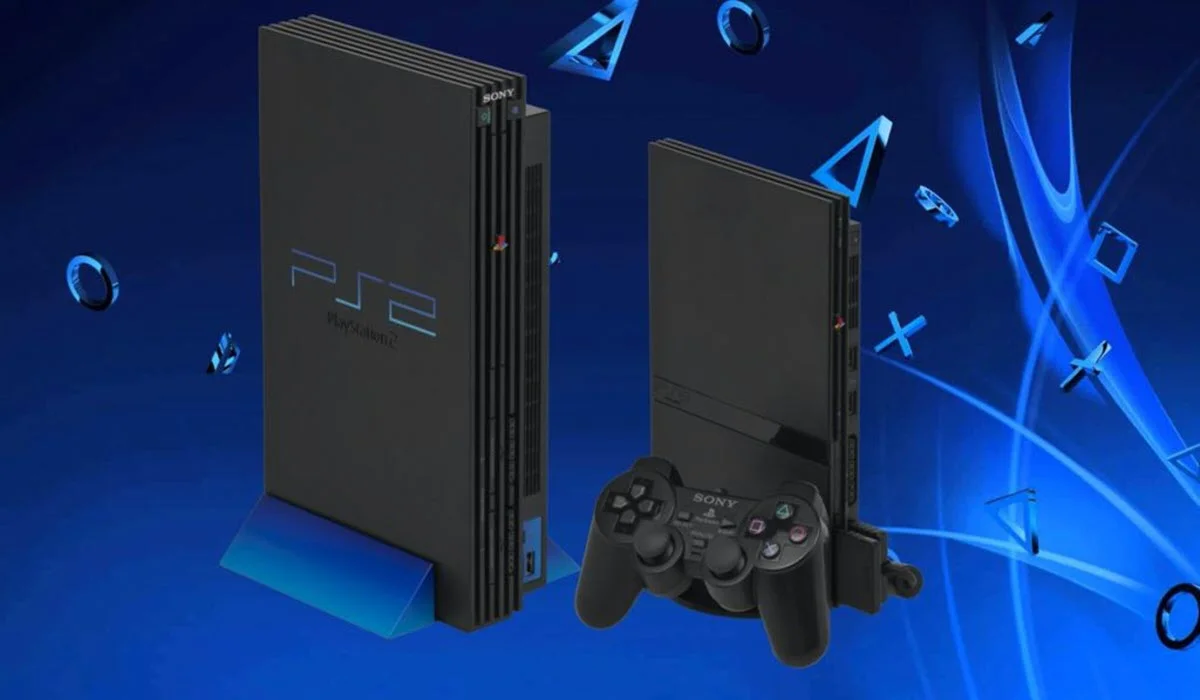
The PlayStation 5 homebrew community has crossed a notable technical milestone. With the release of version 2.02 of the PS5SX2 emulator, jailbroken PlayStation 5 consoles can now read, extract, and run original PlayStation 2 DVD-ROM discs directly through the console's integrated optical drive.
Developed by programmer sword_pdf, the homebrew tool adapts the open-source PCSX2 engine to run natively on Sony hardware across firmware versions 7.00 through 13.60. The update demonstrates that the physical drive in disc-model PS5 units can process legacy optical media, highlighting a long-standing point of friction between community preservation efforts and Sony's closed commercial ecosystem.
Optical Drive Dumping and the Architecture of PS5SX2
PS5SX2 does not operate as an exploit itself. Instead, it runs on systems already unlocked through kernel exploits on compatible system software. The emulator pairs the CPU recompilers of PCSX2 with a specialized Vulkan graphics backend built atop Mihawk-99's ps5vk driver, translating legacy Emotion Engine instructions into modern shader calls.
Earlier builds required users to transfer digital disc images over local network connections or external USB drives. Versions 2.01 and 2.02 altered that pipeline by granting the emulator low-level read access to the PS5's optical drive. When an original PlayStation 2 DVD is inserted, the application initializes an automatic extraction procedure known as disc dumping, copying the raw data to internal high-speed storage before starting the software.
The user interface reflects this transition directly. "While a PS2 disc is dumping the shelf shows it as an entry with a spinning disc and dumping %... The game cannot be launched until dumping is complete," sword_pdf stated in project release notes. Once stored locally, games can render at up to 6x native internal resolution—achieving 4K presentation—alongside optional widescreen patches, 60 frames-per-second frame-rate fixes, and analog display filters that simulate CRT scanlines and VHS tape artifacts.
The Physical Optical Drive Barrier: Why Blue CDs Remain Unreadable
While the breakthrough broadens access to thousands of titles, it also exposes a physical limitation engineered into modern PlayStation hardware. During the PlayStation 2 lifecycle, games were pressed onto two distinct media formats: higher-capacity silver DVD-ROMs and single-layer CD-ROMs, recognizable by their deep blue undersides.
The Ultra HD Blu-ray optical drive inside the PlayStation 5 houses lasers for Ultra HD Blu-ray discs (a 405-nanometer violet diode) and standard DVDs (a 650-nanometer red diode). To reduce manufacturing complexity and per-unit production costs, Sony omitted the 780-nanometer infrared laser diode required to read Compact Discs, continuing a design choice first introduced with the PlayStation 4 in 2013.
Because the internal optical assembly physically lacks an infrared laser, it cannot register the data tracks on Compact Discs. Consequently, PS2 titles pressed on blue CD-ROMs—including early classics like Tekken Tag Tournament, Ridge Racer V, and Half-Life—cannot be dumped or played through the console's integrated slot. The same hardware absence prevents the playback of original PlayStation 1 discs and standard audio CDs, leaving external USB disc drives as the only theoretical route for optical CD media on modified units.
Peripheral Compatibility and Compatibility Milestones
Beyond disc reading, the latest build expands hardware input mapping to accommodate legacy titles that rely on specialized controllers. The update resolves timing and input quirks for rhythm accessories, including the guitar controllers used in the Guitar Hero series, while incorporating custom profile optimizations for hardware-intensive releases such as God of War II.
Overall compatibility within PS5SX2 now exceeds 2,000 PlayStation 2 titles, leveraging two decades of community testing accumulated by the PCSX2 project. The software also supports state saving, cheat engines, and integration with community tracking platforms like RetroAchievements.
In community forums, sword_pdf acknowledged interest in exploring optical disc reading for PlayStation 3 media in future releases. However, executing PS3 software presents a substantially higher engineering hurdle. The asymmetric multi-core Cell Broadband Engine of the PS3 has proven notoriously difficult to replicate in software, meaning any physical disc reading of PS3 media would remain constrained by emulation performance limitations rather than optical drive access alone.
Commercial Preservation Versus Sony's Closed Ecosystem
The arrival of physical disc dumping on jailbroken hardware highlights the divide between manufacturer strategy and hardware capability. When the PlayStation 3 launched in 2006, the initial 60-gigabyte model (CECHA01) carried the physical Emotion Engine and Graphics Synthesizer chips, providing complete backward compatibility at a launch price of $599. Sony subsequently removed the dedicated silicon in later hardware revisions to trim production expenses.
On current systems, Sony restricts access to classic PlayStation libraries through digital channels. Selected PS1, PS2, and PSP games are sold as standalone digital downloads on the PlayStation Store or bundled into the PlayStation Plus Premium and Deluxe subscription tiers, which run at $17.99 monthly in the United States. For PlayStation 3 titles, the company relies entirely on cloud streaming, citing the complexity of the Cell architecture.
By contrast, Microsoft designed the Xbox Series X and Xbox One to accept original Xbox and Xbox 360 physical discs as digital entitlement keys, downloading curated, enhanced emulation packages without requiring extra purchase. PS5SX2 demonstrates that the PlayStation 5 optical drive can physically process legacy DVDs, but accessing that capability carries severe consumer trade-offs.
Running unsigned homebrew code breaches Sony Interactive Entertainment's Terms of Service. Consoles connected to PlayStation Network services while modified risk permanent account suspensions, complete device bans, and immediate nullification of manufacturer warranties. For standard consumers, those administrative penalties ensure that physical retro playback on modern PlayStation hardware remains an experimental hobbyist pursuit rather than a mainstream feature.
PS5SX2 version 2.02 proves that the PlayStation 5 optical assembly possesses the mechanical and optical capacity to ingest, copy, and execute legacy DVD media when freed from software locks. Yet the achievement arrives with clear boundaries: the physical absence of a 780-nanometer laser permanently closes the door on blue CD-ROMs inside the native drive, and Sony shows no institutional appetite for opening its optical drive to legacy media. Until official platform policies shift, physical retro compatibility on modern PlayStation systems remains strictly an unofficial engineering showcase, separated from the wider market by hardware omissions and service bans.
Was this article helpful?
Your feedback helps our editorial team refine reporting depth and accuracy.
Related Articles
Aug 18, 2026
Project Rasengan: Masashi Kishimoto Returns With New Manga 'Shadow Rising' and 3-Year Naruto Roadmap at NYCC
Masashi Kishimoto officially returns to write and illustrate the new manga Naruto: Shadow Rising, headlining the 3-year Project Rasengan announced at NYCC 2026 alongside an anime crossover and new games.
Oct 25, 2026
Inside the $199.99 Marvel and MTG 'History of Heroes' Countdown Kit
Wizards of the Coast reveals the $199.99 Secret Lair x Marvel's History of Heroes Countdown Kit for November 2, 2026, pairing 28 reprints with 2 preview cards alongside secondary value dynamics and precedent analysis.

Oct 19, 2026
Arkane Lyon Faces November 13 Buyer Deadline as Microsoft Explores Options for Marvel's Blade Studio
A statutory three-week consultation window in France exposes the fragile economics of modern AAA licensing, putting 217 developers and the fate of Marvel's Blade on the line.