Konami Confirms Second and Third Waves of Silent Hill Projects Following Townfall Release
Series producer Motoi Okamoto confirms in Famitsu that Konami is evaluating pitches for second and third waves of Silent Hill after wrapping Townfall.
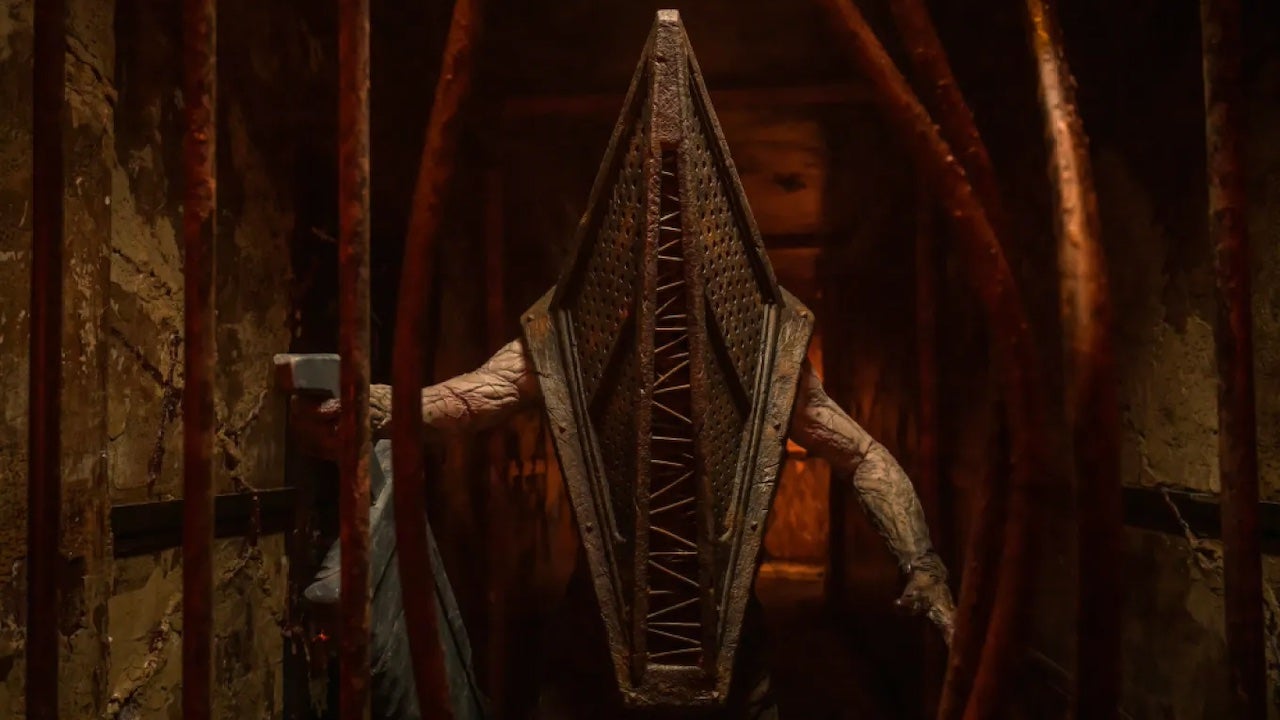
Konami is actively preparing subsequent production cycles for the Silent Hill franchise after completing its initial revival slate. In an interview published in issue 1965 of Japanese gaming magazine Famitsu, series producer Motoi Okamoto confirmed that the company is currently evaluating multiple pitches for second and third waves of releases.
The statement follows the commercial arrival of Silent Hill: Townfall on September 24, 2026, which marked the formal conclusion of the three-game revival roadmap first presented in October 2022. By delivering its initial roster across global development partners, Konami has transitioned the property from a speculative testing phase into a continuous publishing strategy.
Okamoto's Mandate and the Architecture of the Multi-Game Revival
The decision to greenlight multiple Silent Hill titles simultaneously was born out of institutional necessity rather than mere commercial exuberance. During his discussion with Famitsu, Okamoto revealed that convincing executive leadership at Konami to approve three distinct projects required overcoming deep-seated skepticism within the organization.
The producer argued that a single release would fail to rehabilitate player confidence after a decade of dormant silence. Following the commercial arrival of Silent Hill: Downpour in 2012, the franchise endured years of inactivity, punctuated sharply by the high-profile cancellation of Hideo Kojima's Silent Hills project in April 2015. To counter audience suspicion that any new entry might represent a fleeting one-off experiment, Okamoto insisted that "one remake is not enough" to establish durable trust.
That multi-tier mandate formed the backbone of the October 2022 Silent Hill Transmission broadcast. Instead of placing the entire weight of the brand on a solitary project, Konami commissioned Bloober Team's remake of Silent Hill 2, NeoBards Entertainment's period piece Silent Hill f, and Screen Burn Interactive's experimental thriller Silent Hill: Townfall. The free-to-play spin-off Silent Hill: The Short Message preceded the larger titles in early 2024, functioning as an entry point while primary development progressed.
The commercial and critical reception of that opening salvo provided the validation Okamoto sought. The Silent Hill 2 remake shipped more than one million copies within its first three days on store shelves in October 2024, securing an 86 average on review aggregator Metacritic. "Successfully launching this 'first wave' comes with great relief, but we're not stopping here; we must think of the second and third waves," Okamoto stated in the Famitsu interview.
Multi-Studio Licensing and the Execution of the First Wave
Konami's operational approach to reviving Silent Hill marks a structural departure from traditional Japanese publisher playbooks. Unlike competitor Capcom, which retains core development of the Resident Evil series within its internal Division 1 teams running on the proprietary RE Engine, Konami structured Silent Hill around decentralized, global licensing partnerships.
The company engaged specialized independent studios equipped with modern Unreal Engine pipelines while assigning internal producers and legacy creatives to supervise brand identity. For the Silent Hill 2 remake, original art director Masahiro Ito and composer Akira Yamaoka worked alongside Bloober Team in Krakow. For Silent Hill f, Taiwanese studio NeoBards collaborated with visual novel writer Ryukishi07 to set the psychological horror within 1960s rural Japan.
The concluding piece of that slate, Silent Hill: Townfall, demonstrated both the creative flexibility and technical friction inherent in distributed production. Developed by Scottish studio Screen Burn Interactive alongside Annapurna Interactive, the first-person thriller arrived on PlayStation 5 and PC on September 24, 2026. While praised for its claustrophobic soundscape and narrative puzzles on the fictional island of St. Amelia, the release encountered community criticism over aggressive enemy patrol parameters and Pipeline State Object compilation stutter on personal computers.
Screen Burn responded on September 30, 2026, deploying an emergency hotfix to stabilize frame rates while pledging adjustments to the behavioral patterns of pursuit antagonist The Weight. The incident highlighted that managing external studios across multiple continents demands ongoing technical triage, yet it also established that Konami's licensing infrastructure could ship varied stylistic interpretations without collapsing under corporate inertia.
Active Evaluations Versus Contractual Reality
While Okamoto's remarks establish clear corporate ambition, the producer's language distinguishes between preliminary project review and formalized game development. Konami is "looking at a number of projects" across multiple genres and creative pitches, but the publisher has not signed definitive production contracts for specific upcoming titles.
The distinction is critical for setting consumer expectations. In his remarks, Okamoto refrained from detailing whether the second wave will prioritize additional historical remakes—such as the original 1999 Silent Hill or 2003's Silent Hill 3—or commission brand-new narrative branches. The company has not disclosed which external studios have been approached, leaving open whether Bloober Team or Screen Burn will receive follow-up commissions.
No launch schedules, budgetary allocations, or targeted hardware platforms have been submitted to investors or communicated to the public. For fans accustomed to sudden strategic shifts within the games industry, Okamoto's confirmation outlines an evaluation process rather than a locked production calendar. The company is actively gathering proposals, but greenlighting those concepts into fully funded development cycles remains subject to formal internal vetting.
The completion of Silent Hill: Townfall closes a four-year operational chapter that successfully pulled a foundational survival horror property out of a twelve-year commercial hiatus. What is confirmed is that Konami's production desk has institutional authorization to review proposals for second and third waves of titles. What remains undecided is which development teams will secure those contracts, what form those stories will take, and how soon players will return to the fog.
Was this article helpful?
Your feedback helps our editorial team refine reporting depth and accuracy.
Related Articles
Aug 19, 2026
PS5SX2 Enables Physical PS2 Disc Playback on Jailbroken PlayStation 5 Hardware
Homebrew emulator PS5SX2 v2.02 introduces physical PS2 DVD playback directly through the PlayStation 5 optical drive, exposing hardware constraints and Sony's retro ecosystem policies.
Aug 18, 2026
Project Rasengan: Masashi Kishimoto Returns With New Manga 'Shadow Rising' and 3-Year Naruto Roadmap at NYCC
Masashi Kishimoto officially returns to write and illustrate the new manga Naruto: Shadow Rising, headlining the 3-year Project Rasengan announced at NYCC 2026 alongside an anime crossover and new games.
Oct 25, 2026
Inside the $199.99 Marvel and MTG 'History of Heroes' Countdown Kit
Wizards of the Coast reveals the $199.99 Secret Lair x Marvel's History of Heroes Countdown Kit for November 2, 2026, pairing 28 reprints with 2 preview cards alongside secondary value dynamics and precedent analysis.