SEGA Unveils Rio de Janeiro Setting for Crazy Taxi: World Tour at BGS 2026
SEGA and series creator Kenji Kanno presented a 30-minute playable demo of Crazy Taxi: World Tour at Brasil Game Show 2026, revealing a Rio de Janeiro open-world map with authentic licensed storefronts ahead of its 2027 multiplatform launch.
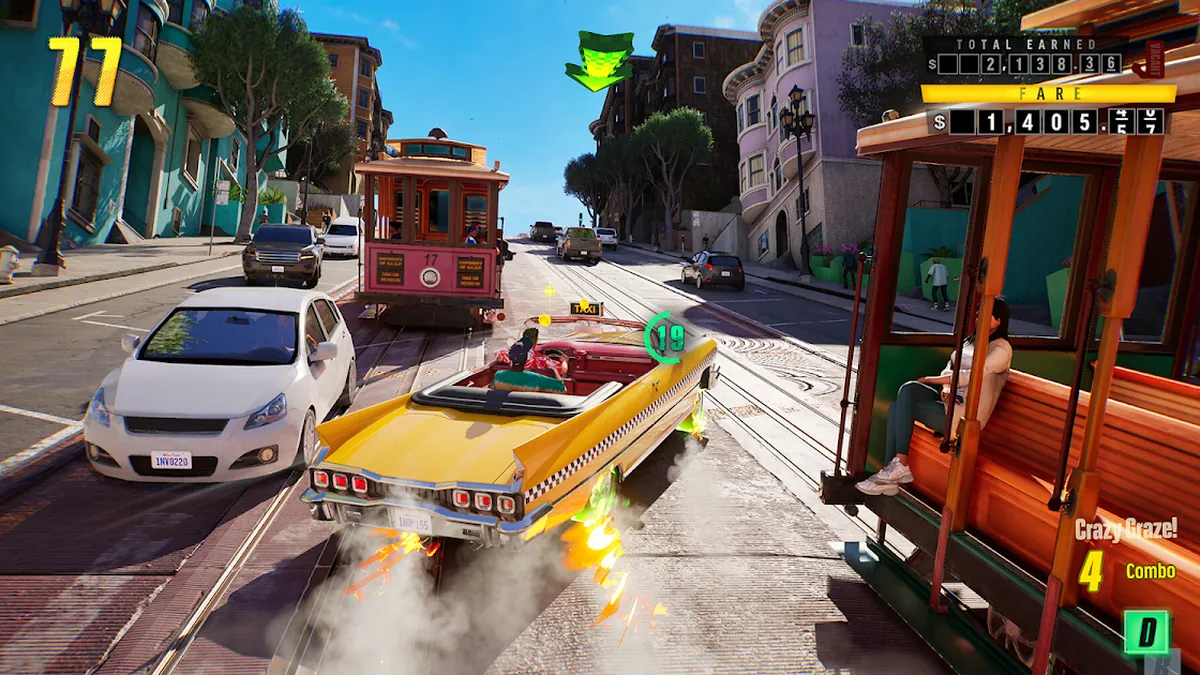
During a featured stage presentation at Brasil Game Show 2026 in São Paulo, SEGA and series creator Kenji Kanno officially announced that Crazy Taxi: World Tour will feature an open-world metropolitan stage set in Rio de Janeiro. Accompanied by a gameplay trailer titled "Welcome to Brazil" and a playable 30-minute demonstration on the convention floor, the showcase confirmed that the South American locale operates as the fourth destination in the reboot's five-city campaign progression, Brazilian outlet GameBlast reported.
The demonstration provides the first tangible hands-on benchmark for the arcade racing property in more than two decades, following years of brand dormancy after early 2000s console releases. Positioned as a tentpole release within SEGA's wider "New Era, New Energy" intellectual property revival initiative, the title is scheduled for a multiplatform rollout in 2027 across PlayStation 5, Xbox Series X|S, PC via Steam and the Microsoft Store, and Nintendo's upcoming hardware successor, widely designated as Nintendo Switch 2.
Translating Dreamcast Arcade Physics into Modern Open-World Quests
The 30-minute playable session on the BGS show floor established how development teams are adapting classic arcade mechanics to open-world requirements. Where modern racing titles lean toward realistic physics simulations or sterile highway grids, the convention build maintains the aggressive inertia of the 1999 original. Handling models emphasize rapid acceleration, sharp handbrake drifts, and low-friction vehicular collisions designed to sustain unbroken momentum through congested streets.
Core fare mechanics continue to challenge drivers with picking up passengers and racing toward green destination rings against strict countdown timers. However, the mission hierarchy incorporates expanded objectives alongside traditional transit fares. Highlighted missions include comic stunt scenarios, such as transporting an extreme sports passenger wearing a wingsuit, building maximum speed toward an urban overlook, and slamming the brakes to launch the character into the air, with performance evaluated by horizontal flight distance.
Vehicle customization garages and dedicated street race challenges appear across the map to break up repetitive passenger drop-offs. The production adopts a vibrant, stylized art style that reinforces its slapstick arcade roots, addressing earlier doubts from international previews regarding flatter visual shading in preliminary pre-alpha footage.
Authentic Rio Architecture and the Evolution of Real-World Brand Partnerships
The Brazilian environment integrates coastal geography with steep hillside communities, drawing recognizable topographic cues from Rio de Janeiro. Environmental footage highlights sun-drenched waterfronts, winding cliffside roads reminiscent of the Corcovado mountain range—without displaying the Christ the Redeemer statue itself—and dense hillside settlements featuring localized street art. Environmental details include animated wildlife, such as toucans perched on urban infrastructure, and pedestrian crowds reacting dynamically to reckless cab driving.
In Crazy Taxi: World Tour, SEGA modernized this corporate integration for the South American market, embedding authentic commercial facades for established domestic chains, including fast-food operator Habib's, steakhouse franchise Fogo de Chão, and consumer electronics retailer Fast Shop.
In the original 1999 arcade and Dreamcast releases, licensed commercial destinations like Pizza Hut, KFC, and Tower Records served as functional navigational landmarks. The domestic storefronts in the Brazilian stage fulfill that identical navigational role, directing drivers toward recognizable retail chains during high-speed transit runs across the city.
Global Campaign Scope and Cross-Platform Multiplayer Architecture
The narrative framework of the single-player campaign centers on veteran cabbie Axel, whose vehicle is stolen by a masked syndicate, prompting an international pursuit across five distinct world regions. The Rio de Janeiro map serves as the fourth chapter of that journey, following previously teased urban stages set in the United States, Germany, and Japan, while a fifth international territory remains unrevealed by publisher representatives.
Beyond the single-player pursuit, SEGA confirmed networked multiplayer modes designed to sustain active matchmaking pools. The suite introduces "Pickup Race," a competitive mode where rival drivers contest the same passenger fares simultaneously, alongside "Cops 'N' Cabbies," an asymmetrical pursuit mode testing evasive driving against aggressive enforcement units. Cross-platform support will connect PlayStation 5, Xbox Series X|S, and PC players within unified matchmaking lobbies from day one.
The technical scope also solidifies SEGA's early support for Nintendo's hardware roadmap. By targeting the upcoming Nintendo Switch 2 simultaneously with desktop and home console platforms, the studio ensures portable parity, revitalizing the handheld appeal that previously supported Crazy Taxi: Fare Wars on the PlayStation Portable in 2007.
Release Milestones and Open Operational Questions Ahead of 2027
While the presentation at Brasil Game Show outlined core gameplay systems and regional environments, several publishing details remain unresolved. SEGA confirmed a general 2027 release target, but executives declined to specify a narrower launch quarter or fixed calendar date. Similarly, the studio has not detailed its retail monetization structure, leaving unconfirmed whether the package will arrive as a traditional boxed premium product or adopt an evolving live-service seasonal model.
Questions also remain regarding the licensed soundtrack, a cultural hallmark of the original Dreamcast titles that popularized punk rock staples from The Offspring and Bad Religion. SEGA has not disclosed whether those legacy tracks will return or if regional musicians will accompany the international stages. Until the publisher clarifies those licensing and distribution terms, the playable build at BGS 2026 demonstrates that the chaotic kinetic foundation established by Kenji Kanno remains operationally sound.
Was this article helpful?
Your feedback helps our editorial team refine reporting depth and accuracy.
Related Articles
Aug 24, 2026
Crimson Desert’s 77 Metascore Sparks Industry Reckoning Over Review Embargos and Day-One Patches
Pearl Abyss executive Lybee Park acknowledges pre-launch review conditions and missing day-one patches impacted Crimson Desert's 77 Metascore as sales pass 5 million.
Aug 22, 2026
Gears of War: E-Day Sells 230,000 Copies as Game Pass Cannibalization Debate Reignites
Alinea Analytics reports Gears of War: E-Day sold 230,000 copies as 1.7M played via Game Pass, with $30 early access upgrades driving $37M launch revenue.
Aug 21, 2026
Konami Confirms Second and Third Waves of Silent Hill Projects Following Townfall Release
Series producer Motoi Okamoto confirms in Famitsu that Konami is evaluating pitches for second and third waves of Silent Hill after wrapping Townfall.