Dragon Ball Super: Beerus Rebuilds Anime Canon With 19 Streamlined Episodes
Eleven years after rushed television deadlines damaged the original broadcast, Toei Animation condenses early Dragon Ball Super into 19 polished episodes, adopting the cinematic visual language of Broly.
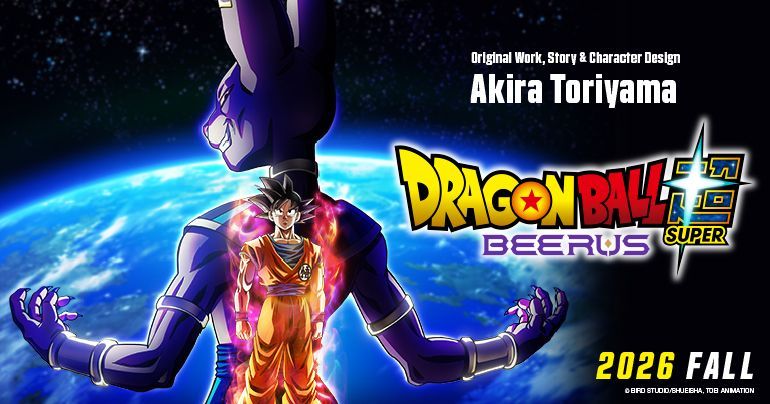
Toei Animation officially broadcast the second episode of Dragon Ball Super: Beerus on October 18, 2026, marking a decisive overhaul of the franchise’s television foundations. The production condenses three foundational story arcs into 19 streamlined episodes.
Streaming internationally on Crunchyroll and Hulu following its Japanese television debut on Fuji TV, the project revisits the 2015 series with upgraded animation and narrative revisions. By stripping away protracted filler, the studio removes prolonged pacing segments that drew sustained criticism during the original run. The restructuring establishes a revised model for how the studio packages its flagship catalog for modern streaming platforms.
The 2015 Broadcast Crisis and the Limits of Continuous Production
When Dragon Ball Super premiered in July 2015, Toei Animation operated under an aggressive broadcast model that left creative teams with virtually zero production buffer between weekly deliveries.
That compressed schedule led directly to the critical disaster of Episode 5 on August 9, 2015, where the initial duel between Son Goku and Lord Beerus displayed unfinished keyframes and distorted anatomical proportions. Reports from anime industry outlets and retrospective analyses by Polygon noted that outsourcing under emergency deadlines damaged the franchise's global prestige. Franchise creator Akira Toriyama even expressed public dissatisfaction with the visual quality of the early television run in subsequent print interviews. The resulting community backlash turned that sequence into a lasting cautionary tale across the anime industry.
The studio historically relied on open-ended 52-week annual schedules for decades across foundational titles like Dragon Ball Z and One Piece. The visible strain on Dragon Ball Super demonstrated that modern high-definition digital broadcasts could no longer sustain uninterrupted television pipelines without suffering severe quality degradation.
Cutting the Fat: How 41 Episodes Shrank into 19
The new 19-episode architecture slashes more than half of the televised run originally dedicated to the first three sagas. Between July 2015 and April 2016, the original broadcast required 41 episodes to adapt the Beerus, Golden Frieza, and Universe 6 sagas.
In the 2026 edition, the Battle of Gods arc drops from 14 episodes to 6, cutting out side plots and comedic padding. The Golden Frieza arc shrinks from 13 episodes down to 6, streamlining the training intervals before the tyrant's resurrection. The Universe 6 tournament arc contracts from 14 episodes to 7, tightening the tournament brackets against Champa's fighters. In total, the production eliminates 22 episodes of filler, delivering an exact mathematical reduction of 53.66 percent across the opening acts.
This sharp compression transforms what was once an agonizingly slow recap of two theatrical feature films into a fast-paced episodic narrative built for modern streaming audiences.
Viewers who previously skipped the television series to watch the 2013 and 2015 films now encounter an episodic cut that moves with comparable narrative momentum. The trimmed runtime removes the bloated subplots involving the Pilaf gang and prolonged banquet delays on Bulma's cruise ship. By focusing exclusively on divine martial arts progression, the series aligns directly with modern consumer expectations for serialized action.
The Broly Blueprint and Visual Modernization
Rather than applying simple digital filters or automated upscaling over old masters, Toei Animation commissioned comprehensive redraws and compositing adjustments inspired by Naohiro Shintani’s art direction on Dragon Ball Super: Broly. The harsh, fluorescent digital sheen that defined the 2015 television broadcast has been replaced with softer linework, textured backdrops, and dynamic lighting. The revised aesthetic restores organic warmth to character silhouettes during high-speed exchanges.
Veteran voice talent returned to the studio for re-recorded dialogue, anchored by Masako Nozawa as Son Goku, Koichi Yamadera as Lord Beerus, and Masakazu Morita as Whis. The vocal tracks match tighter lip-sync timing on redrawn fight sequences, restoring the menacing gravitas to Beerus's divine temper.
The production package also introduces fresh musical compositions to establish its prestige status. Rock vocalist Megatera Zero provides the new opening theme, 'ONOGAMI,' delivering raw rhythmic drive to match the visual tempo of the battles. Japanese singer VK Blanka performs the ending track, 'Kan Peki No Peki,' providing a polished contemporary contrast to the orchestral score. These acoustic updates distance the series further from its troubled 2015 counterpart, establishing an elevated sensory tone for the entire production.
Multi-Platform Distribution and Akira Toriyama's Ongoing Legacy
Corporate management surrounding Dragon Ball shifted fundamentally following the death of Akira Toriyama in March 2024. The intellectual property is now managed through coordinated collaboration between Bird Studio, Capsule Corporation Tokyo led by executive producer Akio Iyoku, and Shueisha alongside Toei Animation. Their joint roadmap prioritizes archival preservation and high-finish seasonal releases over relentless television exposure.
Global distribution rights mirror this curated commercial approach, with Crunchyroll locking down day-and-date simulcasts across the Americas and Europe, while Hulu and Netflix secured secondary streaming windows. Multi-platform licensing ensures that new viewers encounter a polished canonical baseline rather than the compromised 2015 television masters.
Pending Sagas and Production Milestones
Toei Animation has confined its confirmed production slate strictly to these 19 episodes, leaving future adaptations of the Future Trunks and Tournament of Power arcs unannounced. The production committee has similarly provided no operational timeline for adapting the manga-exclusive Moro and Granolah sagas into television animation. Studio executives and distributor Crunchyroll have yet to announce official premiere dates for English, Spanish, and Portuguese dubbing tracks, keeping international viewing focused on the ongoing weekly Japanese broadcast.
Was this article helpful?
Your feedback helps our editorial team refine reporting depth and accuracy.
Related Articles
Sep 13, 2026
Cyberpunk: Edgerunners 2 Trailer Sets October 20 Debut With Standalone Night City Crew
Returning to Night City with ten standalone episodes on October 20, Studio Trigger and CD Projekt Red trade nostalgic fan service for a raw, four-character underworld study led by Clancy Brown.
Sep 10, 2026
Dragon Ball Xenoverse 3 Embraces Age 1000 to Escape a Decade of PS4 Hardware Limits
Bandai Namco and Dimps officially reveal Dragon Ball Xenoverse 3 for a 2027 launch on PS5, Xbox Series X|S, and PC, advancing the franchise into Akira Toriyama’s Age 1000.
Aug 18, 2026
Project Rasengan: Masashi Kishimoto Returns With New Manga 'Shadow Rising' and 3-Year Naruto Roadmap at NYCC
Masashi Kishimoto officially returns to write and illustrate the new manga Naruto: Shadow Rising, headlining the 3-year Project Rasengan announced at NYCC 2026 alongside an anime crossover and new games.