CD Projekt Red Completes World Vision for Project Hadar Without Entering Pre-Production
CD Projekt Red finalizes the conceptual foundation for Project Hadar, beginning early gameplay prototypes while keeping full pre-production on hold.
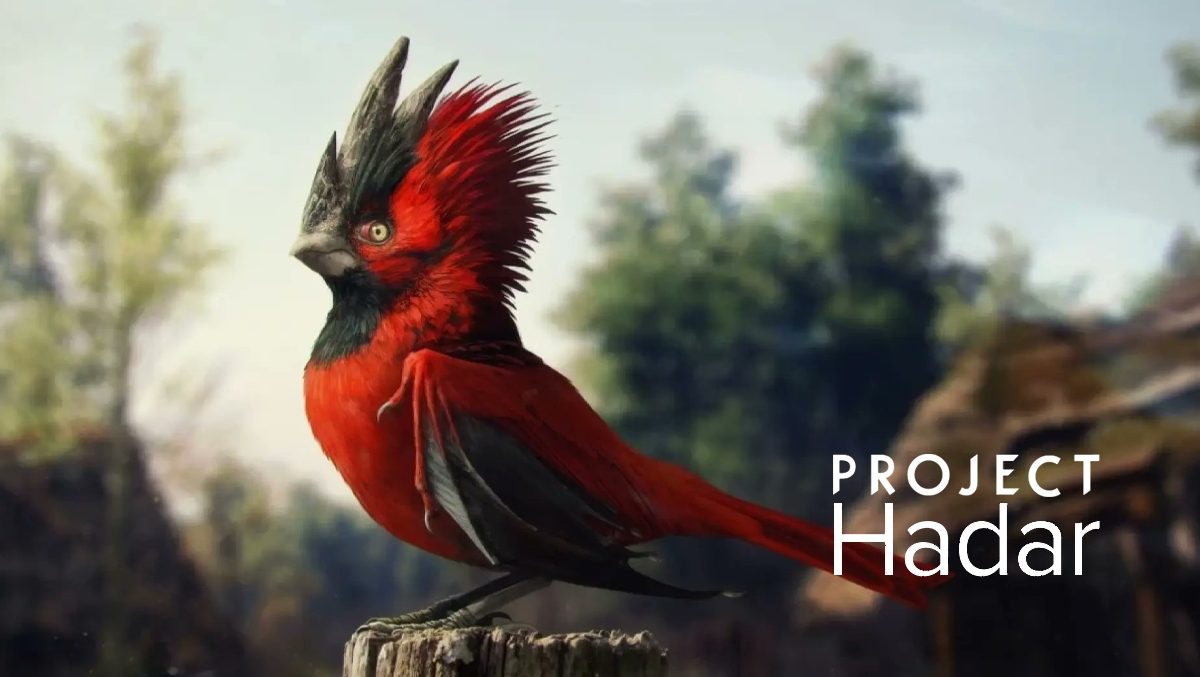
CD Projekt Red has officially finalized the world vision for Project Hadar, completing the foundational conceptual framework for its first entirely original intellectual property. Joint chief executive officer Michał Nowakowski revealed the milestone in an interview with Polish financial news agency PAP Biznes on Thursday, confirming that exploratory teams have begun testing preliminary gameplay mechanics.
The studio has nevertheless drawn a firm operational boundary around the announcement. Nowakowski stressed that the project has not entered pre-production, keeping full-scale resource commitments on hold while the company concentrates its production workforce on the next mainline entry in The Witcher franchise. For an audience accustomed to accelerated hype cycles, this distinction marks a critical operational threshold.
The Practical Divide Between World Vision and Pre-Production
Conceiving an entirely new universe from scratch represents what Nowakowski described as the studio's most demanding creative undertaking to date. While previous blockbusters relied on the foundational literature of Andrzej Sapkowski or the tabletop rulebooks of Mike Pondsmith, Hadar requires building mythology, social architecture, and aesthetic rules with zero pre-existing canon.
Reaching a coherent worldview took several years of quiet exploration by a dedicated core group within the company's Warsaw headquarters. The team is now testing foundational gameplay mechanics through small playable prototypes, evaluating how the world functions in motion before locking technical dependencies into code. Studio leadership expects this exploratory prototyping phase to continue throughout the current production calendar without committing to a public release target.
That deliberate pacing explains why pre-production remains a distant milestone rather than an immediate step.
The Echo of Sirius and Team Scaling Lessons in Boston
The cautious cadence reflects hard operational lessons learned from Project Sirius, the multiplayer Witcher title under development at The Molasses Flood in Boston. Nowakowski addressed recent adjustments at the American studio, explaining that the development group had previously grown beyond where they were in iteration.
That candid assessment points back to March 2023, when CD Projekt Red recorded a 42.9 million zloty impairment allowance to reboot Sirius after evaluating its commercial scope. The Boston studio, acquired in 2021 after making The Flame in the Flood, had expanded headcounts before its cooperative multiplayer gameplay loop was fully finalized. Studio management stepped in to restructure the project framework, taking a formal write-off rather than pushing an unfocused pipeline into production.
By highlighting that Hadar will not scale prematurely, studio leadership signals an active effort to avoid repeating those overhead traps. Nowakowski reiterated that the publisher plans to remain exceptionally careful when demonstrating features for projects exploring unfamiliar formats. The experience prompted a broader operational shift across all satellite studios in Poland and North America.
Engineering discipline now dictates that hiring spikes must follow proven mechanics rather than speculative concept art.
Resource Allocation Across Polaris and Hadar
Operational filings from CD Projekt Red outline a stark pyramid of engineering priorities across its international footprint. The studio currently directs the vast majority of its technical muscle toward active franchise tentpoles rather than exploratory concepts.
More than 500 developers are actively assigned to Project Polaris, the fourth core Witcher title built on Epic Games' Unreal Engine 5, representing nearly half of the group's 1,045 total employees. Another 180 developers continue building the foundations for Project Orion, the Cyberpunk sequel anchored at the studio's North American hub in Boston. By contrast, Project Hadar currently operates with a compact group of just over 30 developers. Management has communicated plans to investors to expand that exploratory strike team toward approximately 50 staff members through late 2026.
This distribution demonstrates that Hadar functions as an internal research laboratory rather than an active assembly line.
The company's technological migration away from the proprietary REDengine to Unreal Engine 5 reinforces this staged approach. Polaris serves as the architectural spearhead, establishing the core technical pipelines and custom open-world tools that Hadar will eventually inherit once full production commences.
Creative Autonomy and the Margin Math of an In-House Universe
Developing an in-house property carries profound commercial implications for CD Projekt Red's long-term corporate margins. Over the past two decades, the studio navigated complex royalty negotiations and rights agreements with original creators to sustain its flagship titles.
The studio originally acquired the interactive rights to The Witcher from author Andrzej Sapkowski in the late 1990s for a modest lump-sum payment of roughly 35,000 zlotys before a high-profile legal dispute in 2018 prompted a comprehensive multi-year reconciliation agreement in December 2019. Similarly, the rights to Cyberpunk required extensive licensing frameworks with tabletop designer Mike Pondsmith and R. Talsorian Games. While both partnerships proved immensely lucrative, they introduced external profit-sharing obligations across game sales and potential media adaptations.
An original IP removes third-party licensing encumbrances entirely. Owning 100 percent of the underlying rights grants the company uncompromised freedom over licensing, merchandise, and live-action adaptations without sharing gross revenues.
The Studio Roadmap Heading into the Next Decade
The leadership team at CD Projekt Red plans to maintain this phased ramp-up for Hadar throughout the next fiscal cycle. Public communications and marketing beats will remain focused almost exclusively on the production progress of Polaris and the ongoing pre-production work on Cyberpunk Orion. Studio executives have scheduled further operational checkpoints for Sirius as The Molasses Flood refines its multiplayer framework.
Executive leadership has made clear that Project Hadar will stay behind closed doors while early mechanics undergo rigorous prototyping. Players anticipating the studio's first original universe should prepare for several years of disciplined silence before the world sees daylight.
Was this article helpful?
Your feedback helps our editorial team refine reporting depth and accuracy.
Related Articles
Sep 11, 2026
Marvel Cosmic Invasion Adds Playable Doctor Doom and Invisible Woman in November DLC
Dotemu and Tribute Games announce The Siege of Castle Doom for Marvel Cosmic Invasion, adding Doctor Doom and Susan Storm to a roster hitting 21 fighters.
Sep 10, 2026
Dragon Ball Xenoverse 3 Embraces Age 1000 to Escape a Decade of PS4 Hardware Limits
Bandai Namco and Dimps officially reveal Dragon Ball Xenoverse 3 for a 2027 launch on PS5, Xbox Series X|S, and PC, advancing the franchise into Akira Toriyama’s Age 1000.

Sep 2, 2026
Sony Reaffirms 2028 Physical Disc Phase-Out with Japan PS5 Digital Announcement
Sony Interactive Entertainment reiterates its unyielding January 2028 deadline for physical disc phase-out, anchoring the policy in the Japan-exclusive PS5 Midnight Black Digital announcement and 82 percent digital software sales.