Boruto Chapter 38 Triggers Konoha Leadership Crisis as Shikamaru Faces Treason Accusations
Official previews for Boruto: Two Blue Vortex Chapter 38 reveal treason accusations against Shikamaru Nara as Kawaki apologizes to a sealed Naruto in Daikokuten.
The governance of the Hidden Leaf Village reached a critical juncture on October 18, 2026, when official preview pages for Boruto: Two Blue Vortex Chapter 38 confirmed an escalating political confrontation between the acting administration and the Fire Nation feudal court. Released through Shueisha’s V-Jump ahead of the chapter’s worldwide publication on October 20, 2026, the promotional materials outline formal treason allegations leveled against the Eighth Hokage, Shikamaru Nara. Simultaneously, the sequence reveals Kawaki standing within the pocket dimension of Daikokuten, offering a direct apology to the inert bodies of Naruto Uzumaki and Hinata Hyuga.
The simultaneous crises expose the structural fragility of Konoha three years after the activation of Omnipotence. While the village military forces remain committed to containing extraterrestrial threats outside the perimeter, civilian authorities have initiated formal procedures to dismantle Shikamaru’s wartime command.
The Fire Daimyo's Challenge to Military Autonomy
Kobu, the diplomatic representative appointed by the Daimyo of the Land of Fire, renewed his campaign to depose Shikamaru during a tense administrative assembly. The envoy asserted that the acting Hokage committed high treason by issuing covert operational directives to Mitsuki during the defensive engagement against Mamushi. While Kobu previously lacked documentary evidence, the preview depicts a Konoha operative presenting physical fragments from Shikamaru’s personal notebook to substantiate the claim. The identity of this internal informant remains unrevealed in the preliminary panels, signaling the presence of active dissidence within the village security apparatus.
This administrative offensive marks the culmination of financial pressures initiated earlier in the serialized narrative. In Chapter 36, published in July 2026, Kobu formally threatened to suspend feudal fiscal allocations to the Hidden Leaf after recurring incursions undermined regional stability. The emergence of an internal whistleblower armed with written documentation converts what was once speculative friction into an immediate constitutional challenge that restricts operational discretion.
Civilian oversight in the shinobi world has historically functioned as a contractual formality rather than an active disciplinary mechanism. Since the founding compact negotiated by Hashirama Senju, the Hidden Leaf operated as an autonomous mercenary state funded by the capital in exchange for national defense. Kobu’s aggressive posture indicates that the feudal aristocracy now views the military hierarchy as politically vulnerable and administratively compromised. The balance of authority that persisted through four global ninja wars has collapsed into open regulatory scrutiny.
Kawaki's Soliloquy and the Temporal Vault of Daikokuten
Within the parallel realm of Daikokuten, the narrative provides an intimate perspective on Kawaki’s psychological isolation. Utilizing the dimensional portal inherited through Isshiki Otsutsuki’s Karma, Kawaki visits the temporal vault where he placed Naruto and Hinata during the climax of the first series. The preview demonstrates Kawaki expressing genuine remorse toward his adoptive parents, speaking directly to their motionless forms.
Kawaki explicitly clarifies the rationale behind their prolonged imprisonment. By his own admission, sealing Naruto and Hinata in an environment insulated from the flow of time was calculated to spare them the trauma of witnessing Boruto’s eventual death. Kawaki views both himself and Boruto as complete Otsutsuki entities whose mutual extermination represents the sole guarantee of global survival. As documented in Chapter 77, biological matter stored inside Daikokuten experiences zero cellular aging, ensuring that the Seventh Hokage remains physically intact while his home village disintegrates politically.
His solitary vigil in Daikokuten confirms that personal guilt has begun to erode his tactical resolve.
The Omnipotence Trap and the Collapse of Ninja Deterrence
The legal vulnerability confronting Shikamaru stems from the absolute nature of Eida’s Omnipotence. Because the divine technique altered the collective memories of humanity to cast Boruto as the rogue assassin of the Seventh Hokage, Shikamaru cannot mount a public defense. Acknowledging that he established telepathic communication with Boruto via the Yamanaka clan would legally validate the treason charge under Konoha military jurisprudence.
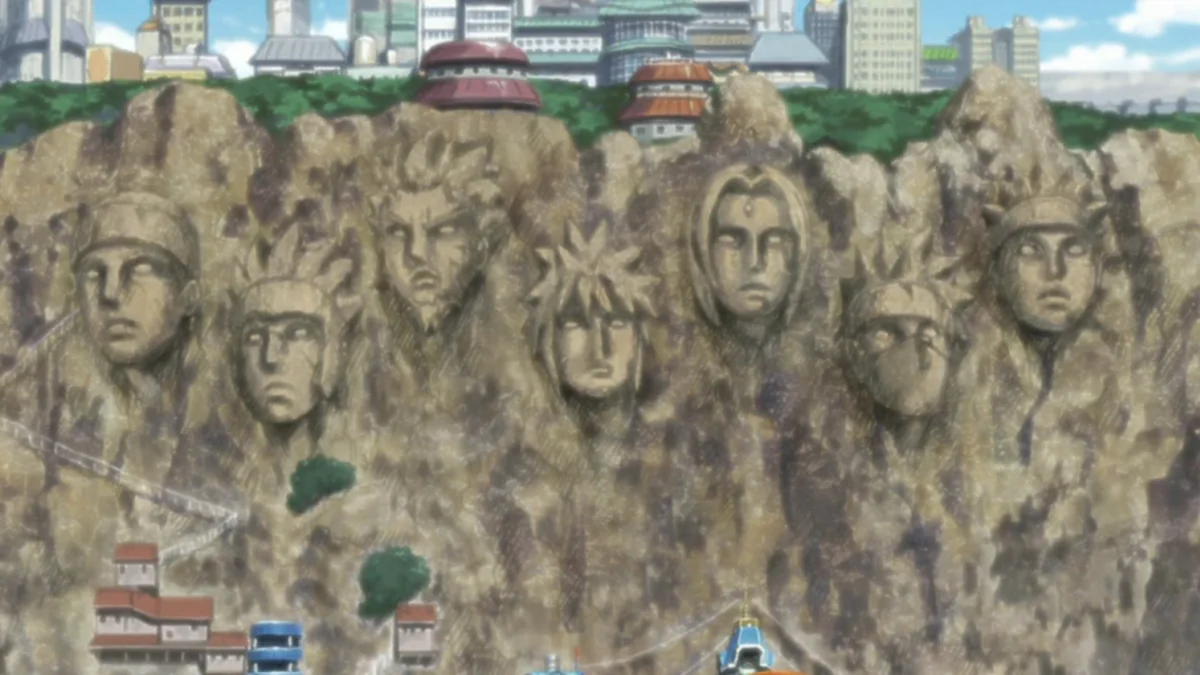
Shikamaru has treated his position as an interim obligation since the day Naruto disappeared. His continued refusal to allow his likeness to be carved into the Hokage Rock serves as a visual affirmation of Naruto’s enduring legitimacy. Yet that very modesty now deprives his office of symbolic authority during executive disputes with the capital. Historically, the military autonomy established by Hashirama Senju depended on overwhelming force, exemplified by Kurama’s chakra reserves and the analytical mastery of Sasuke Uchiha’s Rinnegan. Following the permanent depletion of those strategic assets, the civilian aristocracy no longer defers to shinobi leadership as an untouchable military protectorate.
The loss of strategic deterrence has permanently reshaped the relationship between the ninja village and the royal palace. Without an invincible military asset to deter civilian intervention, the Eighth Hokage must navigate political compromise under the threat of bankruptcy. Kobu’s exploitation of the leaked Yamanaka records indicates that Konoha’s internal chain of custody has broken down under peacetime bureaucracy.
Official Shueisha Schedule and the Resolution of Leaf Governance
Shueisha and Viz Media will publish Boruto: Two Blue Vortex Chapter 38 simultaneously across international digital storefronts on October 20, 2026, at 15:00 UTC. The installment will be accessible in multiple localized translations via the Manga Plus platform and the official Shonen Jump digital portal.
Mikio Ikemoto and Masashi Kishimoto structured this confrontation to determine whether the Hidden Leaf can withstand administrative subversion while confronting active incursions from Jura and the Shinju clones. The release of Chapter 38 establishes the formal timeline for resolving whether Shikamaru retains administrative control or surrenders the executive seat before the Seventh Hokage is released from stasis. The editorial team at Shonen Jump scheduled simultaneous digital distribution across international markets.
Was this article helpful?
Your feedback helps our editorial team refine reporting depth and accuracy.
Related Articles
Oct 4, 2026
Dragon Ball Super: Beerus Rebuilds Anime Canon With 19 Streamlined Episodes
Eleven years after rushed television deadlines damaged the original broadcast, Toei Animation condenses early Dragon Ball Super into 19 polished episodes, adopting the cinematic visual language of Broly.
Sep 13, 2026
Cyberpunk: Edgerunners 2 Trailer Sets October 20 Debut With Standalone Night City Crew
Returning to Night City with ten standalone episodes on October 20, Studio Trigger and CD Projekt Red trade nostalgic fan service for a raw, four-character underworld study led by Clancy Brown.
Sep 10, 2026
Dragon Ball Xenoverse 3 Embraces Age 1000 to Escape a Decade of PS4 Hardware Limits
Bandai Namco and Dimps officially reveal Dragon Ball Xenoverse 3 for a 2027 launch on PS5, Xbox Series X|S, and PC, advancing the franchise into Akira Toriyama’s Age 1000.