Ramayana Part One Establishes Five-Hundred-Million-Dollar Scale Under DNEG and Sony Pictures
Backed by a combined $500 million budget, visual effects by DNEG, and a rare joint score from Hans Zimmer and A.R. Rahman, Ramayana: Part One tests whether Indian epic filmmaking can capture global multiplexes on Hollywood's grandest scale.
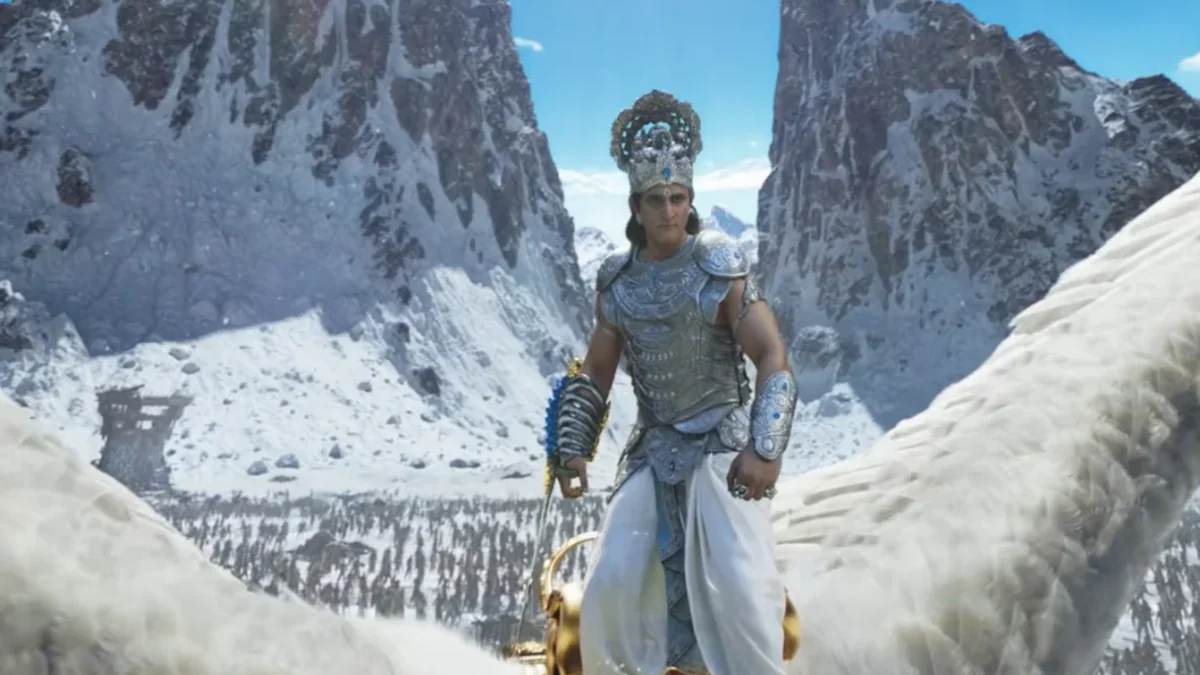
Media house Prime Focus Studios and visual effects studio DNEG have formally established the release calendar for Ramayana: Part One, confirming a worldwide cinema debut on November 5, 2026. The two-part mythological adaptation operates on an estimated combined capitalization of ₹4,000 crore, equivalent to approximately $500 million.
The feature marks a deliberate departure from standard territorial release models by securing an overseas distribution pact with Sony Pictures for international territories outside India. Domestic exhibition across the northern Hindi-speaking circuit remains anchored with Karan Johar’s Dharma Productions. Directed by Nitesh Tiwari, the venture brings together Ranbir Kapoor as Rama, Sai Pallavi as Sita, and Kannada superstar Yash as the antagonist Ravana.
Production Architecture and the Five-Hundred-Million-Dollar Dual Budget
Mounting a two-part epic across ancient India required a financial architecture rarely assembled outside Southern California.
Financed jointly by Prime Focus Studios and Yash’s banner Monster Mind Creations, the $500 million aggregate budget distributes financing across two distinct feature films scheduled for consecutive multiplex rollouts. Dividing capital expenditure between Part One and a planned 2027 sequel allows the team to assemble physical infrastructure, virtual sets, and digital asset libraries across a multi-year horizon. Director Nitesh Tiwari arrives at the helm holding the historical benchmark for Indian box office receipts, having directed the 2016 biographical sports drama Dangal to more than $300 million in global receipts. Replicating that international commercial performance remains essential, as recovering a $500 million capital outlay requires ticket receipts far exceeding the historical capacity of traditional domestic movie theaters alone.
Namit Malhotra, founder of Prime Focus and global chief executive of DNEG, confirmed that the capital allocation supports simultaneous photography and asset creation across both installments. Studio disclosures emphasize that the scale reflects physical sets constructed across Indian soundstages alongside long-term digital pipeline development.
DNEG's Visual Effects Pipeline and the Mythological Canvas
Visual effects duties fall directly on visual effects powerhouse DNEG, which commands eight Academy Awards for Best Visual Effects through landmark achievements on Dune, Interstellar, and Tenet. Alongside its sister facility ReDefine, DNEG coordinates worldwide digital teams to realize ancient Ayodhya, complex celestial weapons, and large-scale mythological warfare across expanded IMAX aspect ratios. In a formal statement released through the studio's newsroom, Malhotra noted that Indian cultural heritage possesses the artistic depth to command international cinema screens: "Having spent much of my life working across the global film industry, I have always believed that India's greatest stories deserve to be experienced on the world's biggest stage. Today, we finally have the artists, the technology, the craftsmanship and the collective ambition to present this extraordinary cultural legacy to audiences everywhere with the authenticity, scale and cinematic excellence it deserves."
Tiwari echoed that technical discipline, stating that each creative choice across camera staging, set design, and computer-generated character rendering honors the ancestral text through modern craft.
Cross-Cultural Composition: Hans Zimmer and A.R. Rahman in the Studio
The acoustic foundation of Ramayana pairs two of cinema’s most decorated modern composers in a rare cross-continental creative partnership. Two-time Academy Award winner Hans Zimmer joins two-time Oscar laureate A.R. Rahman to construct an original orchestral score recorded under music label T-Series. The soundtrack merges Western symphonic brass and choral arrangements with traditional Indian classical ragas and Sanskrit vocal text. Studio reports indicate that Zimmer recognized the cultural weight of the epic during initial discussions with producers, requesting that Rahman receive top billing across official music credits.
Commercial bidding for the project's music rights broke existing Indian publishing records well before the public release of the initial teaser. Entertainment trade outlet Pinkvilla reported that Malhotra sought a ₹100 crore valuation for the all-language cross-market publishing package.
T-Series secured the rights with a top offer of ₹75 crore, outpacing a competing bid of approximately ₹60 crore submitted by Sony Music. That transaction marks a 38.8% increase over the previous Indian benchmark, established when Dhurandhar: The Revenge licensed its audio rights for ₹54 crore. The publishing contract ensures widespread promotion across streaming services, digital platforms, and physical home media.
Sony Pictures and the Forty-Million-Dollar Global Marketing Framework
International exhibition demands promotional capital comparable to Western studio tentpoles.
Rather than relying on a conventional minimum-guarantee licensing agreement, the production negotiated a specialized distribution framework with Sony Pictures Entertainment. Pinkvilla’s industrial reporting revealed that Sony committed $25 million (approximately ₹235 crore) exclusively toward international marketing, theater booking, and promotional prints. The filmmaking partners supply an additional $15 million (₹140 crore), expanding total promotional capital to $40 million (₹375 crore). That marketing footprint guarantees day-and-date cinema placement in North America, Western Europe, Southeast Asia, and the Middle East, with dedicated digital projection across premium large-format and IMAX auditoriums.
Theatrical Milestones and the November Diwali Corridor
Sony Pictures and Dharma Productions have finalized release delivery schedules targeting November 5, 2026, synchronizing with the lucrative holiday Diwali box office frame. Digital mastering teams at DNEG are completing final visual effects passes across five official Indian languages to prepare foreign dubs and localized subtitled editions.
Prime Focus Studios continues post-production asset rendering while scheduling supplementary photography for the second installment set for release in late 2027. The studio has avoided locking formal international streaming distribution windows, preserving exclusive big-screen windows throughout the holiday corridor. Box office tracking will begin assessing foreign pre-sales during early autumn 2026.
Was this article helpful?
Your feedback helps our editorial team refine reporting depth and accuracy.
Related Articles
Sep 19, 2026
Steven Soderbergh Steps In to Direct The Batman Part II as Matt Reeves Retains Creative Control
Steven Soderbergh steps in to finish principal photography on The Batman Part II alongside Matt Reeves, forging a rare auteur alliance that shields the sequel's 2028 release date while preserving its hard-boiled creative vision.
Sep 17, 2026
Taika Waititi’s Klara and the Sun Stumbles at London Film Festival as Critics Reject Tonal Shifts
Early reviews for Taika Waititi's adaptation of Kazuo Ishiguro's novel ignite a sharp critical debate between contemplative science fiction and studio comedy.

Sep 8, 2026
DC Studios Balances Swamp Thing Script Writing with Batman Beyond Ambitions
By confirming that James Mangold’s Swamp Thing awaits an active script and framing Batman Beyond as an aspirational concept, DC Studios leadership reinforces a methodical production pace that rejects artificial release deadlines.