Clayface Tops Box Office at $24.5M as DC Studios Validates Mid-Budget Horror
DC Studios and Warner Bros. secure an estimated $24.5M domestic debut for 'Clayface' on a $44M budget as James Gunn defends standalone genre storytelling over mandatory crossover machinery.
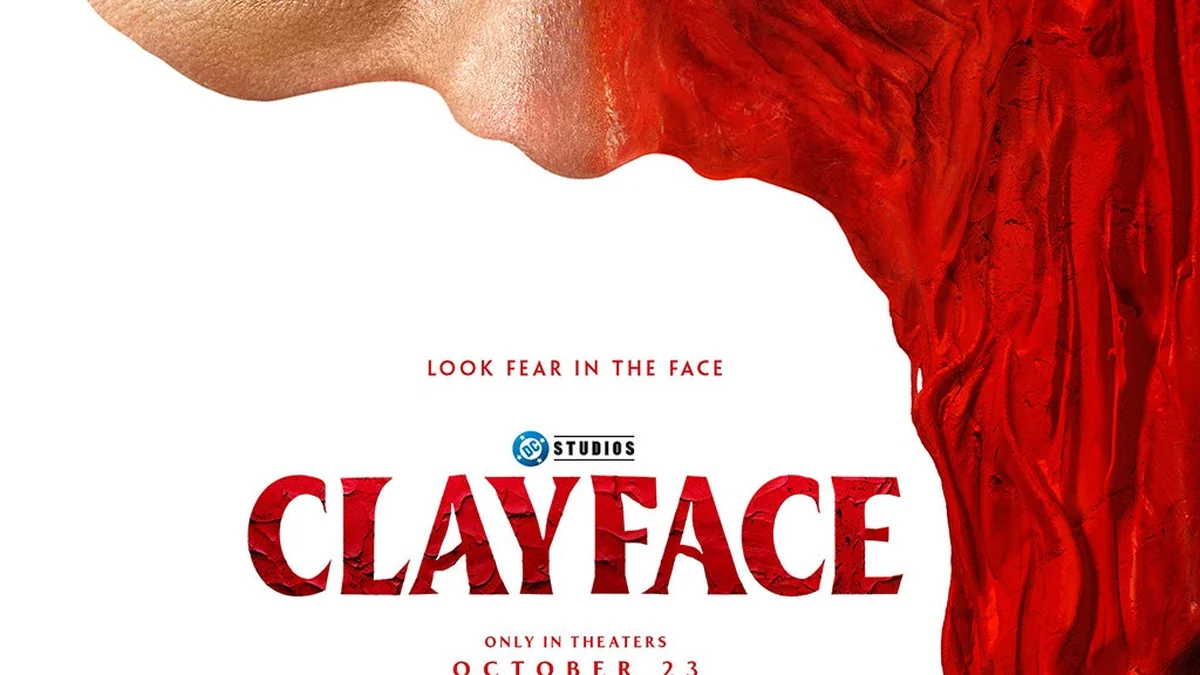
DC Studios and Warner Bros. secured the top domestic box office position as Clayface generated an estimated $24.5 million across its opening weekend in 3,458 theaters. The R-rated psychological horror feature pushed its worldwide theatrical debut to $43 million, marking a solid initial financial return against a reported $44 million production budget.
Directed by James Watkins from a screenplay penned by Mike Flanagan and Hossein Amini, the production bypassed standard superhero formulas to deliver a contained character study of Matt Hagen, portrayed by Tom Rhys Harries. Rather than leaning on sprawling multiverse cameos, the creative team centered the narrative on physical degeneration and identity loss. The release represents the first dedicated horror title distributed under the creative leadership of DC Studios co-chairs James Gunn and Peter Safran.
Financial Calibration and Mid-Tier Risk Management
Opening with $3.5 million from Thursday evening previews, the domestic total landed at the upper boundary of pre-release tracking estimates that projected between $20 million and $25 million.
The financial calculus surrounding Clayface diverges sharply from the $150 million to $200 million budgets traditionally assigned to contemporary comic book tentpoles. International markets contributed $18.5 million across 48 territories, establishing a 57% domestic to 43% international split during its initial theatrical rollout. By containing physical production expenses below $45 million, Warner Bros. reduced the global breakeven threshold before premium video-on-demand and digital retail windows open. The model mirrors the operational discipline common in mid-tier horror cinema rather than franchise spectacles.
Exit polling revealed immediate audience traction ahead of the Halloween corridor, with CinemaScore recording an A- grade among opening night ticket buyers. That grade matches scores earned by mainstream studio horror successes while outperforming several recent superhero adaptations that struggled with steep second-week declines.
Narrative Roots and the Anatomy of Transformation
The script retools the classic comic character introduced by Bill Finger and Bob Kane, anchoring Matt Hagen as a rising Hollywood actor whose career collapses after mob violence leaves his face disfigured. An experimental compound offered by Dr. Barbara Fox, played by Naomi Ackie, initially restores his facial features before destabilizing his cellular cohesion. The narrative tracks how external physical repair accelerates internal psychological fragmentation across three distinct acts.
Brazilian outlet Ei Nerd highlighted how this tragic descent directly mirrors the 1992 Batman: The Animated Series two-parter "Feat of Clay", where Hagen desperate vanity ultimately consumes his humanity.
Watkins deliberately restricted digital visual effects throughout the opening hour, relying on prosthetics and practical animatronics to capture the painful early stages of Hagen condition. The camera lingers on physical decay rather than stylized combat, maintaining an intimate point of view that frames the transformation as a medical crisis.
The Tragic Climax and Canonical Ambiguity
The third act escalates when Hagen murders Detective John Borrelli inside a deserted television studio, crossing an ethical boundary that severs his remaining ties to civilian society. In interviews following the theatrical release, Watkins explained that Hagen acted out of a warped fusion of survival instincts and obsessive attachment rather than calculated villainy. When Fox attempts to trigger a remote cellular kill switch, Hagen dissolves into the city storm drainage system. The final sequence reveals him shaping crude clay figures in total isolation, confirming that the physical monster has completely displaced the man.
Trade analysts and critical outlets noted that the concluding sewer imagery directly sets up the comic-accurate mass of the character while withholding a conventional heroic resolution. Production footage and featurettes documented on IGN official Clayface portal emphasize that the narrative operates as a complete psychological arc rather than a promotional teaser for future team-ups.
Creative Autonomy versus Mandatory Shared Universes
Public discourse during opening weekend quickly gravitated toward where the character fits within upcoming DC Studios continuity, prompting studio co-chair James Gunn to clarify the company slate philosophy.
Addressing audience questions online, Gunn rejected the assumption that every cinematic chapter must function as connective tissue for an impending crossover event. He stated that individual stories hold artistic validity on their own terms, comparing the expansive DCU framework to the varied tonal standalone narratives found within Star Wars.
Gunn reiterated that audiences should experience Clayface as an autonomous horror entry rather than scrutinizing background props for future franchise clues. That perspective aligns with producer Matt Reeves ongoing efforts to build self-contained Gotham stories that explore specific cinematic subgenres. The studio willingness to release an R-rated character study signals room for tonal variety alongside high-profile releases like Superman and Supergirl.
Theatrical Longevity and November Box Office Runway
Holding power across the upcoming holiday frame will serve as the true measure of whether mid-budget horror can remain a reliable pillar for DC Studios multi-tier release calendar.
Second-weekend retention in early November will test whether word-of-mouth among horror fans offsets the arrival of competing studio releases. The theatrical window benefits from a clear competitive corridor in the genre category until late-month holiday family titles enter wide distribution. Warner Bros. executives have not announced development on a direct sequel, keeping future appearances for Hagen tied to potential appearances in broader Gotham-based productions. Industry observers now await official second-week drop metrics to evaluate the project ultimate multiple against its $44 million production baseline.
Was this article helpful?
Your feedback helps our editorial team refine reporting depth and accuracy.
Related Articles
Oct 26, 2026
Marvel Depowers Captain Marvel for May 2027 Series
Marvel strips Carol Danvers of her cosmic invulnerability in 'Avengers: Armageddon' #5, clearing the board for G. Willow Wilson and Rachael Stott to rebuild Captain Marvel as a grounded, tactical leader in May 2027.

Oct 25, 2026
DC Studios Sets Creative Quality Gate for 'Lanterns' Season 2
DC Studios evaluates creative development for 'Lanterns' Season 2 before committing to production, prioritizing storytelling quality over immediate streaming viewership metrics.

Oct 25, 2026
Inside the $199.99 Marvel and MTG 'History of Heroes' Countdown Kit
Wizards of the Coast reveals the $199.99 Secret Lair x Marvel's History of Heroes Countdown Kit for November 2, 2026, pairing 28 reprints with 2 preview cards alongside secondary value dynamics and precedent analysis.